 |
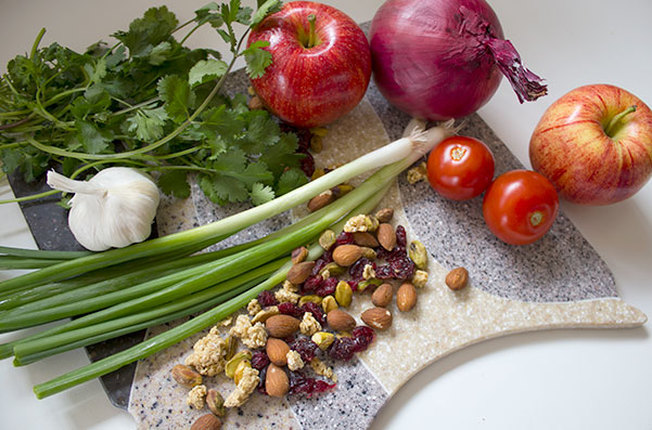
| Quercetin is abundant in foods such as apples, onions, and more! Photo Credit: Imagemag.ru |
Many of us have heard the phrase
“an apple a day keeps the doctor away,” but recent research has strengthened
the health-connection between eating quercetin-abundant foods (like apples) and
reduced inflammation in the body. A
recent meta-analysis studying the effects of dietary quercetin supplementation
on blood levels of C-reactive protein (CRP:
a protein that is produced in the body in response to inflammatory
stress and often used as a inflammation marker and predictor of cardiovascular
disease) found that this specific antioxidant and flavonoid has strong
anti-inflammatory associations. Studies on quercetin have found the compound to
be a potential dietary combatant of cardiovascular disease and other
inflammation-related processes. Before you add apples and more to your shopping
list, here is what the studies concluded.
A total of 7 randomized controlled
trials were gathered for the meta-analysis, looking at the primary outcome of
change in CRP concentrations due to quercetin supplementation. The studies were
conducted primarily in Europe and the Middle East, in overweight/obese
patients, athletes, and patients with rheumatoid arthritis or Type 2 Diabetes.
Subjects were given doses of daily quercetin from 150 to 500 mg/day to consume
for anywhere from 6 to 10 weeks. After the duration of the supplemented period,
researchers looked at the differences from baseline measures of CRP in
participants. Overall, the combined trials found that CRP levels significantly
declined following quercetin supplementation. CRP levels were shown to decrease
significantly when quercetin was supplemented at levels of at least 500 mg/day,
for at least 8 weeks, in persons younger than 45 on average, and in those with
initial CRP levels lower than 3 mg/L. Trials,
however, found no significant changes to the circulating levels of CRP when
persons who were supplemented received less than 500 mg/day, were supplemented
less than 8 weeks time, were on average older than 45 years of age, or had
baseline CRP levels greater than 3 mg/L.
The verdict? While the results show
a promising relationship between increased intake of quercetin and decreased
CRP levels, inconsistencies prove further research is warranted. Limitations
included the fact that the grouped studies were not performed in certain
populations, namely in healthy, normal weight individuals, the elderly, or
adolescents; the results seen in these seven studies may not carry over into
other distinct populations. Also, it is plausible that lifestyle factors
outside of quercetin intake may have affected participants’ CRP levels, as well
as the variations among what was used as a supplement in the studies. However,
quercetin is heralded by much research for its positive anti-inflammatory
effects and can be found in a variety of unprocessed foods. Increasing the
consumption of fruits, vegetables, and teas can nutritionally bolster the diet
with these potential anti-inflammatory compounds. According to researchers,
quercetin has been recognized as safe, with supplementation at doses above 1000
mg/day showing only mild side effects such as nausea and headaches. Quercetin
can be found in apples, but also in other whole foods such as onions, berries,
red grapes, broccoli, green tea, black tea, citrus, capers, cocoa, and red
wine; it can also be found in supplement form. The questions of the effectiveness
of supplements, the ideal amount (in mg) to consume, the flavonoid amount in mg
per usual serving of food, the differences in absorbance among the natural
sources of quercetin, and the effectiveness of quercetin for inflammatory
reversal versus prevention are questions to consider asking of future research.
Comments
Post a Comment